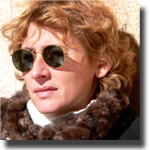
par : Nathalie Zajde
Nathalie Zajde Doctor of Psychology,
Assistant Professor in Clinical and Psychology and Psychopathology
University Paris 8 — France
The psychological care of victims of the Shoah and their descendants.Nathalie Zajde Doctor of Psychology,
Assistant Professor in Clinical and Psychology and Psychopathology*
* www.baycrest.org
If Not Now....
e-JournalLecture given at the Seventh commemoration conference for the genocide of the Tutsi, and other crimes against humanity committed in Rwanda in 1994, organized by the IBUKA Association in Brussels on the 24th of March 2001. Text translated from French to English by Beverley Lowry and Catherine Grandsard
The Polish Jews
Allow me first of all to present myself. I was born in France in the sixties of parents born in Paris, before the war, themselves children of Polish Jewish refugees, my grandparents. My family comes from a community which numbered more or less 3 400 000 people before the war: the Jews of Poland, the Yiddishland. Anti-Semitism during the Second World War exterminated 3 million Jews (Hilberg, 1985). Until the war, Jews in Poland lived mostly in Jewish districts and villages where they spoke their language -Yiddish (a mixture of German and Hebrew)-, they had their own Jewish schools where Hebrew, Jewish prayers and thought were taught, they lived by the Jewish calendar, the Sabbath and other festivals, ate strictly kosher food prepared according to Jewish law, , had their own places of worship, their ritual slaughterers, their courts of law, their authorities, their judges who judged according to Jewish law, their doctors and healers and of course their cemeteries. They lived in communities, they married or divorced under the control of or with the aid of the family in accordance with Jewish norms, and they gave birth to Jewish children, this too in accordance with specific conditions and respecting their own rituals. Inspired by Tobie Nathan's thinking (Nathan 1994), I would like to bring to your attention the fact that the notion of human remains an abstract notion, an ideological notion. Indeed, in the same manner that the Bambara people do not consider that they give birth to simple human beings, but rather to Bambara children, or that the Lari give birth to other Laris and not to "universal" humans, the Polish Jews, in their time, gave birth to Polish Jews, provided ways of doing things and, above all, their divinity were respected.
I must also remind you of a Jewish particularity; that of living in exile. For the last 2 millennium, since the destruction of the Temple, the Jews have traditionally lived within foreign nations, among non Jews (goyim) and have always managed to establish their communities in places to which they do not really belong.
Hence, from the time of the destruction of the Temple and until the birth of the state of Israel, the Jews have always had, and known how, to live among foreign nations, among the natives, creating specific communities, without really mixing, without dispersing, , yet connected to the host country. We can say that the Jews possess a central "core" which is present in their divinity, in their objects, in their rites etc. and that they have managed to preserve this core through time and history, throughout a certain diversity.
In the lives of Jews, there have been catastrophes, unhappiness, brutal deaths, atrocious killings, Pogroms, but faced with these events, the European Jewish world, until the Second World War, responded with its own resources. The Jewish people disposed of their own interpretations of unhappiness and of sickness. They possessed their own nomenclature of diseases and typically Jewish, effective, care techniques. They had therapists, miraculous rabbis who knew how to communicate with dybbuks, the dead who possess the living; they knew how to decode the secret contents of sacred texts and to decipher the intentions of their God. They knew how to relate to non-humans, invisible beings and to mend, according to the Jewish logic of existence, troubles suffered by the living. Faced with misfortune, as dreadful as may be, the Jewish world never found itself destroyed. On the contrary, Jews found in misfortune the obligation to summon their strength and reinforce who they were.
Reminder of facts
During the Second World War, killings, massacres, ill treatment, deportation to work and extermination camps, forced separation of families, all these actions took place for several years and were undertaken by the Nazis and the authorities in most of the countries invaded by the Germans where Jewish communities were established. At first glance, these actions were rooted in the profound and traditional anti-Semitism of the Christian communities of Europe. What I wish to hear is that the Jewish communities and Jewish thought have alternative explanations for these events. In accordance with Jewish thought, the persecutions are to be placed in perspective with those known to the Jewish people for several millennia and need to be explored as we would explore the events which have stricken and at the same time forged this people throughout its history, explored from the "inside", by referring to the demands of life and of Jewish thought (Zajde, 1995).
Moreover, the persecution of the Jews by Christian communities, during the Shoah is not really a new event; it is regularly represented throughout the centuries (Poliakov 1951, 1955, 1961, 1968, 1977). However, that which is exceptional in the case of the Shoah is, on the one hand, the magnitude of the massacre and, on the other hand, the fact that the massacre of millions of people coincided with the elimination of all the Jewish communities of Europe. In other words, not only did the people die but their worlds disappeared as well.
After the war
The European Jews, numbering more or less 9 million persons before the war, have to a large degree disappeared: Nazism and anti-Semitism exterminated between 5 and 6 million (Hilberg 1985), and the survivors having left their communities, found themselves for the most part in exile. After the war not a single Jewish village remained, nor was there a functioning synagogue in Central and Oriental Europe.
However, there are other conflicting factors which contributed to the disappearance of the Jewish communities of Europe. I can name at least three: Zionism, the massive adoption of revolutionary Marxist ideals, and assimilation, conflicts which began long before the Second World War and which were reinforced thereafter.
The consequences of such phenomena left in their wake a devitalized people deprived of a world of their own world to heal them, to consider them.
Treatment
The official discourse of the countries in question, that is to say, deriving from non-Jewish cultures, was more or less the following: the genocide against the Jews was a terrible moment, inhuman, never seen before, an historical accident, an unthinkable matter. As for the survivors, they were taken care of by medical services (including psychiatry). They were given pensions. Medical services took care of them as if they were ill persons having undergone serious psychic trauma. They paid regular visits to psychiatrists, took psychotropic drugs. Hence, that which they had lived through made of them mentally ill people suffering from Survivor's Syndrome, (what is known today as Post Traumatic Stress Disorder - PTSD), Manic-depression, conditions thought by experts to induce dysfunctional interactions with their children and to cause psychological damage in the second generation. In fact, neither medical services, nor psychiatry, nor psychology have been able to heal these people of what they lived through. None of the above disciplines were able to give sense to or make sense of what they had undergone.
The survivors have never stopped asking themselves why such a catastrophe befell the Jewish people, and why they were left to live. Not because they feel guilty - they well know that they aren't the ones who caused the death of their loved ones, but rather the Germans, however they wish to understand what they have lived through, and in what manner and why they were literally metamorphosed by their experience. They want to know what happened to their parents who disappeared in the flames, all the more because in the Jewish tradition, it is forbidden to burn the dead and it is an obligation to bury the corpse in its entirety. They want to understand why each night they are caught up in nightmares of the camps as if their souls had stayed behind. Such fundamental questions, which neither psychiatry, nor psychology has been able to answer, were left for the next generation to grapple with.
Discussion Groups
At the Centre Georges Devereux, a clinical psychology laboratory of the University of Paris 8 (France), directed by Professor Tobie Nathan, in the context of research in ethnopsychiatry, we have developed discussion groups during the course of the past 10 years for the victims and the children of victims of the Shoah, in order to explore the psychological consequences of the devastating event. The clinical plan of action consists in questioning the event and the consequences with the victims in order to get as close as possible to the lived reality of the participants, as victims or as the descendants of Jewish victims, so that we might elaborate together a certain truth about themselves, and the conditions for treatment programs. In other words, these discussion groups are above all clinical research groups where we avoid at all costs imposing on the participants pre-existing knowledge of the "psyche", and where we conceive with them specific hypotheses; in these groups the participants are considered experts of their own suffering. In the discussion groups which we organise at the University, we include descendants of Shoah victims, but also direct victims who were children hidden during the war and who wish to pool their interrogations on the subject of the horrors lived by their parents; they wish to understand the link between their own existence, their own suffering and the drama of the preceding generation (Zajde 1994, 1995, 1996, 1999) .
In these groups we bring together Jews, and not only "traumatized subjects" or their descendants, because that which we seek to explore is the effect of this massive aggression against the Jews, on the Jews, and not only the effect of a trauma on the individual person. In other words our objective is to understand what has become of the Jews after such an experience rather than validating the PTSD or any other notion belonging to psychiatry or psychoanalysis.
We note that the participants in these discussion groups, mostly children of immigrants, are thoroughly integrated individuals. In other words, they were all brought up in a French environment, that of the French Republic with its codes, values and institutions. And when, in their lives, they experienced pain, unhappiness, or the impossibility of going on living, working, relating to those around them, and other such problems, they sought help from the therapists of the French Republic, that is to say from psychiatrists, psychologists, and psychoanalysts. These therapeutic experiences (Nathan 1998) have also contributed to the process of assimilation in the sense that the descendants of the Shoah adopted, in the course of their different therapies, a way of thinking about their situation and to think of themselves, and their dear ones, which do not belong to the Jewish tradition.
Examples
They say of their parents, who survived the camps, act with them like sadistic and mean torturers, that in fact they identify with their aggressors. When their parents scream in their sleep, they're convinced they suffer from Survival Syndrome (PTSD in today's terms). When they lock themselves up in their rooms for hours refusing to communicate, they are thought to have fallen into a deep depression. Survivors, according to their children, are prey to unconscious defense mechanisms, present in all beings, but exacerbated in their case because of what they lived through. In other words, the descendants of Shoah victims describe their parents as manic-depressives. Quite simply, to describe themselves and their parents, they fall back on notions which are foreign to the Jewish tradition.
We are thus faced with a case of massive assimilation of the descendants of the victims of the Shoah. Indeed, such a discourse makes no sense, and is of no interest whatsoever in Yiddish or in the Jewish universe. Not only would it be difficult to translate, but above all it would come up against other completely foreign and autonomous propositions: precisely those belonging to the Jewish world.
Trauma
We have observed that one of the systematic effects of trauma is the "extraction of the core" of the person; it is the transformation of the individual into a stranger to him/herself (Nathan 1994, Zajde 1998). Victims of trauma say they live a life which is not their own, that they do not recognize themselves, that before the event they were not as they are, that the event has transformed them into another and that since then they do not understand the sense of their existence. Thus, the question for therapists is to understand the metamorphosis, its reasons, its logic, and to repair this transformation, to induce a new one which meets the best interest of the subjects.
What have we discovered in the case of the Jewish victims of the Shoah : they were deprived of their loved ones, of their world, of their being. They witnessed and participated in actions that their normal, everyday life had until then never foreseen. The trauma left them on the wayside of life, invaded by visions, fears, noises which they are unable to decode, which they do not understand but which they know to be directly connected to the genocide. If their community had been preserved, they would no doubt have been taken care of by Jewish healers, who, as all therapists produced by cultural collectives, are experts in the management of atypical things and beings, of anomalous phenomena, and know how to bring back a human into the world of the humans, and to send off a spirit or a dead being back to the world of the dead. As a clinical psychologist, the question I ask myself each time I meet a victim of the Shoah or a descendant is: How might I retrieve his/her soul? And above all, who or what must I serve when I heal a survivor or the child of a survivor? Guided by what thoughts, and using what active principals must I operate? In what matrix of interpretations and actions must I place myself to work on the disorder of the patient? That of his/her group or that of one foreign to him/her?
A clinical exemple: Rachel
In the groups we organize at the University, we include anyone who wishes to participate, anyone who recognizes him/herself in the phrase child of a victim of the Shoah, whether they are neurotic, psychotic, normal, etc. We do not screen participants. In these groups, which meet on Sundays for 8 sessions over a period of an academic year, we talk about everything, discussion is free. The groups are restricted in number, are of no charge and are entirely videotaped in order to create a reliable data base for reflection and research. Often participants have already undergone all sorts of different therapies (psychiatric treatment, psychoanalysis, group therapy, relaxation etc.).
Rachel, born just before the war in Paris of Polish Jewish parents participated in one of the discussion groups. Her father was arrested and deported to Auschwitz in July 1942, her mother, to save her from persecution, decided to place her six-year-old child in the care of French country folk. Rachel thus spent the war with "foreigners", people who abused her, strangers, French Christians peasants. She had many frightening experiences during this period which lasted several years, but, in the end, she was saved. She wished to take part in the discussion group because of her depression and the recurrent phobias she suffered from since the age of 20 ( today she is over 60). She takes psychotropic medication and has been in psychoanalytic and psychotherapeutic treatment for many years. In fact, it was her psychiatrist who referred her to us at the George Devereux Centre, knowing the work we do with survivors and their children.
Rachel's father, whom she loved very much, died in deportation. Since childhood, she has never stopped "talking to him". In moments of suffering and, disarray, she addresses him and weeps. She has an old yellowed photo which her mother had wrapped in a sheet of plastic ; she often takes out the old photo, looks at it, asks her father for help, and cries.
As with all participants in the group, with Rachel, we retraced in detail what had happened to her and her family. She told her story and cried. She complained of her life and sufferings. One day, one of the participants suggested that the group make a trip to Auschwitz, a kind of pilgrimage to the place where a number of relatives of those present in the group had perished. He said, "I want to go pay them a visit, introduce myself to them, after all, that is where they are." The others reacted strongly to this suggestion: yes, no, why some wanted to go, why others didn't, what was likely to happen there, the place being "charged", etc.
Rachel said she didn't wish to go, she was too afraid, and she did not know how she would react. She feared going there. And then, as the discussion on the subject of the possible trip continued, Rachel suddenly began to hiccup rather forcefully, she started to cry, holding her stomach. A bizarre cry, a deep, hollow sound, came from her and she couldn't stop herself. The others were overwhelmed, tried to calm her, and the woman, making an effort to stop the process, and not succeeding, repeated several times, "it isn't me, it isn't me". She held her stomach, doubled over, tried to catch her breath. After about 10 minutes, which seemed to us like hours, Rachel calmed down and the group reacted to her. She repeated that she had had the clear impression that it was not her who had given off the strange noise. The others confirmed that impression, it wasn't her. Who was it, then? Someone (a participant who is a medical doctor) said, "maybe it was your father!" We spoke about her father, of the way in which he had died. She told us how, according to a witness, her father had thrown himself against the barbed wire of the camp. She reminded us that he was not the only one to die there, that most of her family, uncles, aunts, cousins, died in deportation.
It seemed as if, in evoking Auschwitz and the possibility of going there, we had "summoned" the dead.
In the next session, Rachel told us of a marvelous dream which she had had, of colours, which she was going to paint, but more importantly, that she had learned that right at the same she had been having the crisis, her daughter had inexplicably burst into tears, the same daughter who never cried and always adamantly avoided the subject of the war. Rachel told us that she took out the old photo of her father, and that hesitantly, she had unstuck the old plastic and had put the photo into a new frame. She reported that since then she no longer cried when looking at the photo.
And then we spoke again about what had happened. Was it a hysterical attack as her psychiatrist thinks, and as she is also tempted to think? Or was it a Dybbuk? Rachel and most of the members of the group had no idea what a Dybbuk is.
The Dybbuk
The Dybbuk is a typical jewish concept. It is a being, it is also a disease and is equally a specifically Ashkenaze Jewish therapy. The Dybbuk is a dead being who returns to take possession of a living person whom it won't let go until its demands are satisfyed. The Dybbuk makes life impossible for the living person, substitutes his or her own voice, acts, thoughts and words to those of its host. It stops the person from living according to the rules of the living. It is said that young engaged couples are particularly vulnerable to the threat of the Dybbuk. But why would a dead being come back to possess a living one?
As a matter of fact, a Dybbuk possesses a living person in order to request from the latter to perform certain tasks it didn't know how to do or didn't have time to do when alive, either through lack of personal means or through dying brutally, unexpectedly. Generally it's a case of paying back debts, promises, transgressions of Jewish law attributed to the dead person. A Dybbuk is thus a dead Jew, having died badly, persecuted by a fault which forbids it to enter the world of the dead, the world to come, "olam abam". It thus possesses a living being, in general a near one, often someone much appreciated when alive, and imposes upon that person to fulfill certain tasks in its place. Of course, the possessed person, being ill, cannot treat or decode what is happening. It takes a rabbi healer, a pious man and a therapist, to identify the Dybbuk, to communicate with it, to understand what it wants, to translate, and to negotiate its leaving by using a particular technique. The therapist thereby achieves a double liberation: that of the possessed and that of the dead one. The possessed person becomes him/ herself, a living Jew and the dead being, dies. A last word on the subject of the Dybbuk: in Hebrew, Dybbuk comes from dévék the root of which is : Dalet, bet, kouf, which means : to stick, sticking, etc. In other words, in the name itself lies the manner in which the Dybbuk attaches itself to a human.
It has been said that Dybbuks have disappeared, that they no longer exist, and in fact, that they belong to the realm of superstition.Actually, if we wish to be rigorous and rational, we should admit that the scientific community doesn't have the means to say whether Dybbuks do or do not exist, if they have disappeared, or even that it is all superstition. All that we can be sure of is that most of the Rabbi healers who knew how to identify and chase away a Dybbuk, perished in the Shoah and didn't have time to pass on their therapeutic expertise to their descendants.
Double trauma
It is legitimate to ask ourselves what the consequences are of psychological propositions. What can the offspring of a PTSD sufferer or of a manic-depressive do? How can the former create a tie with the latter? Because once a person is recognized as such, there is no doubt that the person finds him or herself affiliated to the world of psychiatry. Is it possible to be the child of a manic-depressive? It seems that once recognized as such, the individual is in the hands of medical doctors, and relatives distance themselves because being related to a manic-depressive is of little interest. In doing this, we give to the psychiatric world, which is not the world of the Jewish people, the task of how to think the surviving parent. Psychiatric diagnostics result logically in the separation of the ill from their near ones. In the case of Shoah survivors, this logic has diabolically reinforced what had already happened during the war: the breaking up of families.
In fact, we are faced with a double trauma: 1) the event in itself, the genocide which terrorized and tortured individuals and operated upon them a painful metamorphosis, extracting them from their core, 2) the absence of a response after the event. The "psychiatrization" or "psychologization" of the extreme experience of the Shoah has made of Jews "survivors", branding them forever as "victims", and never allowing them the possibility to become recovered Jews. It is this same trauma which has been passed on to the following generation.
What is patent regarding European Jews is that the dead Jews have been left without tombs and the living Jews without therapists. Though survivors of the Shoah were transformed, they may have remained Jewish. The children of the victims were born into a non-Jewish world, they sought and received treatment foreign to the Jewish world, and along the way the Jewish dead were lost. Non-Jewish therapies do not know how to respond to children of survivors who suffer from a Dybbuk. Worse still, when the Dybbuk possesses children of Jewish survivors, non-Jewish therapy disqualifies the Jewish dead.
To heal what has been labelled "unthinkable", is necessarily to reconsider, with the interested parties, everything they have lived through, everything that has contributed to making them who they are, and everything they have lost. It is to evaluate the consequences of events, of all events: massacres, bereavements, emigrations, therapies, In other words, everything that has left its mark and changed them. It is to analyze with them what effect these events have had, both positive and negative. Finally, it is to assist them in recreating the most appropriate conditions for them to resume living.
References
Hilberg, R. (1985) La destruction des Juifs d'Europe, Paris Fayard, 1988.
Nathan T. (1994) L'influence qui guérit, O. Jacob, Paris.
Nathan T. (1998), Eléments de psychothérapie in Psychothérapies, en collaboration avec Blanchet A., Ionescu S., Zajde N. Paris, Editions O. Jacob.
Poliakov, L. 1951 Bréviaire de la haine. Paris, Calmann- Levy, 1979.
Poliakov, L. 1955, Histoire de l'antisémitisme tome I Du Christ aux Juifs de cour. , II, III et IV, Paris, Calmann-Lévy, 1968.
Poliakov, L. 1961, Histoire de l'antisémitisme tome II De Mahomet aux Marranes, Paris, Calmann-Lévy, 1966.
Poliakov, L. 1968, Histoire de l'antisémitisme tome III De Voltaire à Wagner, Paris, Calmann-Lévy.
Poliakov, L. 1977, Histoire de l'antisémitisme tome IV L'Europe suicidaire 1870-1933, Paris, Calmann-Lévy, 1983.
Zajde, N. (1998) " Traumatisme " in Psychothérapies Coll. T. Nathan, A. Blanchet, S. Ionescu. Ed. O. Jacob, Paris.
Zajde, N. (1995) Enfants de survivants (1993) réédition, Paris, Ed. Odile Jacob.
218 p.
Zajde, N. (1999) " Shoah et Traumatisme. Ethnopsychiatrie des survivants ashkénazes et de leurs enfants. " in Santé Mentale, juin 1999, n°39, pp 43-47.
Zajde, N. (1999) "An Ethnopsychiatric Approach to the Treatment of Holocaust Survivors and their Children", Selected papers from A time to Heal, Baycrest Centre for Geriatric Care, P. David & J. Goldhar Editors, Toronto, Canada, pp 317-330.
Zajde, N. et GRANDSARD C. (1996) "Kaddish. Rituel de deuil dans un groupe de parole d'enfants de survivants de la Shoah." Nouvelle Revue d'Ethnopsychiatrie, 31. pp. 119-138
Zajde N, (1995). "Un mort non disloqué. Analyse ethnopsychiatrique des processus de deuil chez la fille d'un disparu en camp d'extermination". in Nathan et Coll. Rituels de deuil, travail de deuil, ed. La Pensée sauvage, Grenoble. 103-126.
Zajde, N. (1994) "Les traumatismes que les enfants n'ont pas vécus: effets traumatiques chez les enfants des survivants de la Shoah." in "Enfance et traumatisme."Rivages 2, Rouen.
Droits de diffusion et de reproduction réservés © 2000-2005, Centre Georges Devereux